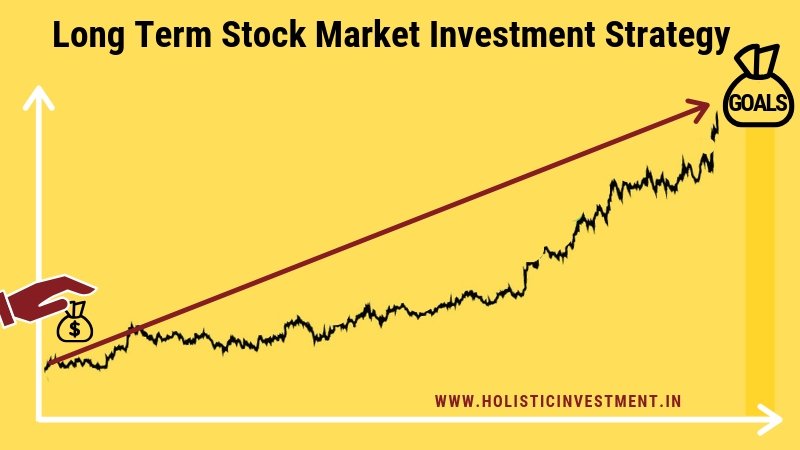
Ever felt that nagging worry about money, the fear of coming up short when it truly matters? It's a universal anxiety, the dread of being "a dollar short and a day late" for life's big moments or unexpected challenges. That's precisely why mastering Long-Term Investment Strategies to Avoid Being Dollar Short isn't just about accumulating wealth; it's about building an enduring financial fortress, ensuring peace of mind, and securing your future.
This isn't about chasing quick fads or timing the market. It’s about cultivating patience, discipline, and a deep understanding of how money grows over years, even decades. Think of it as planting a tree today so you can enjoy its shade and fruit for a lifetime.
At a Glance: Your Blueprint for Lasting Wealth
- Patience Pays: Long-term investments (held over a year) aim for significant growth through compounding, appreciation, and income.
- Bypass the Noise: These strategies help you ride out short-term market volatility and reduce tax liabilities.
- Contrast with Short-Term: Short-term investments offer liquidity and lower risk but typically yield smaller returns.
- Core Strategies: Learn how "Buy and Hold," "Dollar-Cost Averaging," "Index Fund Investing," and others form the backbone of lasting wealth.
- Personalization is Key: The best approach combines several strategies tailored to your unique goals, risk tolerance, and timeline.
- Discipline Wins: Your consistent behavior and adherence to a sound plan will be your greatest asset.
Why the Long Game Matters: Beyond Day-to-Day Market Noise
When we talk about long-term investing, we're discussing assets you intend to hold for more than a year. These aren't quick flips; they're foundational pillars like stocks, bonds, mutual funds, and real estate, all geared towards substantial wealth growth over time. The goal is simple: let your money work for you, compounding and appreciating silently in the background.
This approach demands patience and a commitment to avoid impulsive reactions to market swings. While the rewards can be significant, including greater potential for returns, compounding interest, and reduced tax liabilities, it also carries risks if investments underperform. That's why thorough research, aligning with your financial goals, and understanding your risk tolerance are paramount. Engaging with a financial advisor can also provide invaluable guidance.
A Quick Detour: The Role of Short-Term Investments
It's helpful to briefly contrast this with short-term investments, which are financial assets held for under a year. Think money market funds, Certificates of Deposit (CDs), or Treasury bills. These offer high liquidity and quick returns, albeit with typically lower profit margins than their long-term counterparts. Conservative investors often use them to park funds temporarily, manage cash flow, or seek quick gains, especially during uncertain economic times.
The main advantages of short-term options are their liquidity and reduced exposure to immediate market volatility. However, their lower returns and potential reinvestment risk in low-interest environments mean they're not a primary engine for building lasting wealth. Ultimately, your choice depends on your specific financial goals, risk appetite, and time frame. For avoiding being dollar short in the long run, our focus remains squarely on the strategies that build enduring prosperity.
Your Arsenal of Long-Term Wealth Strategies
Building lasting wealth is less about finding a secret formula and more about applying time-tested principles with discipline. Here are 10 core strategies that, when combined thoughtfully, can form a robust long-term investment plan.
Foundation Builders: Passive, Broad-Market Approaches
These strategies are excellent starting points, emphasizing consistency and broad market exposure over complex stock picking.
1. Buy and Hold: The Zen of Investing
Imagine buying a piece of prime real estate and simply holding onto it for decades, letting its value appreciate naturally. That's the essence of the buy and hold strategy. You purchase quality securities—think strong companies or low-cost index funds—and keep them for years, or even decades, purposefully ignoring the daily market chatter.
This passive technique harnesses the magic of compound growth and significantly cuts down on transaction fees and the emotional pitfalls of frequent trading. To make it work, select robust assets, automate your investments (including dividend reinvestment plans, or DRIPs), and review your portfolio perhaps once or twice a year, rather than reacting to every news headline.
2. Dollar-Cost Averaging (DCA): Smoothing the Market Rollercoaster
The market is unpredictable, and trying to "time" your investments perfectly is a fool's errand. Dollar-Cost Averaging takes the guesswork and emotion out of the equation. With DCA, you invest a fixed amount of money at regular intervals—say, $200 every month—regardless of whether the market is up or down.
This systematic approach means you'll automatically buy more shares when prices are low and fewer when prices are high, ultimately smoothing out your average purchase price over time. It's incredibly effective for systematically managing risk and removing emotional decision-making. Set up automated contributions into broad market index funds or ETFs and stick to it, increasing your contributions as your income grows.
3. Index Fund Investing: Ride the Market's Coattails
Why try to beat the market when you can simply match it? Index fund investing involves purchasing low-cost index funds or Exchange Traded Funds (ETFs) that mirror major market indices like the S&P 500 or the total stock market.
This strategy offers instant, broad diversification at minimal cost, aiming to replicate market returns without the risks of picking individual stocks or the burden of high management fees. Look for funds with extremely low expense ratios (ideally below 0.10%), automate your contributions (leveraging DCA), and periodically rebalance your portfolio—perhaps annually—to maintain your target asset allocation.
Income & Growth Engines: Targeting Specific Returns
Once your foundation is solid, these strategies can help you target specific types of returns, whether it's growing income or high-potential capital gains.
4. Dividend Growth Investing: Your Growing Income Stream
Imagine receiving a regular paycheck from your investments, and that paycheck actually grows larger every single year. That's the appeal of dividend growth investing. This strategy focuses on companies that not only pay dividends but also consistently increase those payouts year after year—often called "Dividend Aristocrats" or "Dividend Kings."
It provides a powerful one-two punch: a growing passive income stream and potential capital appreciation as the company's value grows. Reinvesting those rising dividends further accelerates the compounding effect. Analyze dividend growth rates and payout ratios, prioritize quality companies with strong competitive advantages, and remember to diversify across different industries. Using Dividend Reinvestment Plans (DRIPs) in tax-advantaged accounts can supercharge this strategy.
5. Growth Stock Investing: Betting on Tomorrow's Innovators
For those willing to embrace a bit more risk for potentially extraordinary returns, growth stock investing is a dynamic approach. This involves identifying companies that are poised to grow significantly faster than the overall market. Growth investors prioritize strong forward-looking potential in innovative and expanding sectors, believing that future earnings will justify current high valuations. Think of disruptive tech companies or firms pioneering new markets.
This strategy offers the potential for substantial capital gains by tapping into innovation and technological disruption. Success requires deep analysis of growth drivers (revenue/earnings growth, large addressable markets, competitive advantages), evaluating leadership vision, and diversifying across various growth sectors. It’s also wise to keep an eye on valuation metrics like the Price-to-Sales (P/S) ratio and consider growth-focused ETFs like the Vanguard Growth ETF (VUG) for a diversified approach.
6. Value Investing: Finding Hidden Gems
In a world often swept up in hype, value investing offers a disciplined, grounded philosophy: buy stocks for less than their intrinsic worth. Pioneered by Benjamin Graham and famously mastered by Warren Buffett, this strategy centers on identifying fundamentally strong companies that are temporarily undervalued by the market.
Value investors patiently hunt for bargains, looking for metrics like low Price-to-Earnings (P/E) or Price-to-Book (P/B) ratios, and demand a significant "margin of safety"—meaning they buy at a substantial discount (e.g., 33-50%) to the company's estimated true value. This approach offers downside protection and significant upside potential as the market eventually recognizes the company's true worth. However, it demands patience and the ability to differentiate true value from "value traps"—cheap stocks that stay cheap for good reason.
Diversification & Optimization: Smart Portfolio Management
These strategies focus on how you structure and manage your entire investment portfolio, ensuring it remains robust and tax-efficient.
7. Asset Allocation & Rebalancing: Your Portfolio's GPS
This is a foundational discipline, guiding how you divide your investments among different asset categories—stocks, bonds, real estate, and cash—based on your risk tolerance, time horizon, and financial goals. Rebalancing is the act of periodically adjusting your portfolio back to your chosen target allocations. If stocks have soared and now represent too large a portion, you might sell some stocks and buy more bonds to restore your desired balance.
This framework is critical for managing risk, enforcing discipline (effectively selling high and buying low), and is arguably the most significant determinant of your portfolio's long-term return and volatility. Determine a target allocation (e.g., the "110 – age" rule for your stock percentage), set a rebalancing schedule (time-based or threshold-based), and consider using target-date funds for an automated, hands-off approach.
8. Real Estate Investment: Tangible Wealth, Tangible Returns
Real estate offers a powerful path to wealth by investing in tangible assets, either through direct property ownership or by investing in Real Estate Investment Trusts (REITs). It can provide consistent cash flow from rental income, property value appreciation over time, and valuable diversification from traditional stocks and bonds. Direct ownership often comes with tax benefits, like deductions for mortgage interest, property taxes, and depreciation.
For simplicity and lower capital requirements, starting with REITs is often advisable, as they are liquid and can be held in tax-advantaged accounts. If direct ownership interests you, thorough research into local markets is essential. Real estate crowdfunding platforms, like Fundrise, also offer a diversified, lower-capital entry point into property investing.
9. Tax-Advantaged Retirement Investing: Turbocharging Your Savings
This strategy is less about what you invest in and more about where you invest it. Utilizing specialized accounts like 401(k)s, IRAs (Traditional or Roth), and Health Savings Accounts (HSAs) can dramatically accelerate your wealth accumulation through tax-deferred or tax-free growth. These accounts are designed to boost your net returns by optimizing your tax situation and instill discipline through contribution limits.
Make it a priority to capture the full employer match in your 401(k)—it's essentially free money. Carefully choose between Traditional and Roth IRAs based on your current and projected future tax brackets (or explore a Backdoor Roth IRA if your income is high). Don't overlook HSAs for their incredible triple tax advantage: tax-deductible contributions, tax-free growth, and tax-free withdrawals for qualified medical expenses. Automate and escalate your contributions as your salary increases.
10. International Diversification: Spreading Your Bets Globally
Relying solely on your home country's economy for investment growth is like betting on a single horse in a multi-country race. International diversification involves allocating a portion of your portfolio to companies in developed and emerging economies around the globe. This strategy is a cornerstone of modern portfolio theory, reducing your reliance on any single country's economic performance and tapping into a wider array of global growth opportunities.
It's a powerful way to reduce overall portfolio risk, as different countries often experience different economic cycles, smoothing out your returns and protecting against country-specific risks. A common approach is to allocate 20-40% of your stock portfolio to international markets, using broad-market index funds or ETFs that cover developed (e.g., iShares Core MSCI EAFE ETF) and emerging markets (e.g., iShares MSCI Emerging Markets ETF (EEM)). You might also consider currency-hedged funds to mitigate currency fluctuation risks, and always remember to regularly rebalance your international holdings.
Crafting Your Personalized Investment Blueprint: More Than Just a List
The true power of these long-term investment strategies doesn't come from picking just one. Financial mastery lies in combining several of these ideas into a cohesive, personalized plan that perfectly aligns with your specific goals, risk tolerance, and investment horizon. A robust, well-rounded portfolio rarely puts all its eggs in one basket.
Think of it as building a house: you need a strong foundation, but also walls, a roof, and thoughtful interiors. A smart portfolio often blends a foundational core (perhaps 70-80% in broad-market Index Funds and consistent Dollar-Cost Averaging), a growth engine (maybe 10-15% in Growth Stock Investing or Value Investing for higher potential returns), and an income/diversification layer (5-10% in Dividend Growth Investing or REITs, plus a healthy allocation to International Diversification). All of this should ideally be managed within your Tax-Advantaged Retirement Investing accounts, with regular Asset Allocation and Rebalancing to keep it on track.
The most critical takeaway for successful long-term investing isn't financial intelligence or complex market analysis. It’s consistency and discipline in adhering to your sound plan. Your financial behavior—your ability to stay calm, stick to your strategy, and avoid impulsive decisions—is far more impactful than any short-term market fluctuation.
Common Questions & Smart Answers
Navigating the world of long-term investments can bring up many questions. Here are answers to some common concerns.
How much should I invest?
Start with what you can consistently afford, even if it feels small. The power of compounding means that consistent contributions, even modest ones, add up significantly over time. Aim to invest at least 10-15% of your income, and always take advantage of any employer match in your 401(k). The key is starting now and staying consistent. Waiting too long can cost you dearly in missed growth, as time in the market beats timing the market. Don't be caught flat-footed later on; explore The Watch A Day Late hub to understand the critical impact of timely action.
What if the market crashes?
Market crashes are a natural, albeit uncomfortable, part of investing. For long-term investors, they are not a reason to panic, but rather an opportunity. During a downturn, your Dollar-Cost Averaging strategy means you're buying more shares at lower prices. Historically, markets have always recovered and reached new highs over time. Your best move is to stick to your plan, avoid selling, and continue investing.
When should I check my portfolio?
For long-term investors, frequent checking is detrimental. Daily or weekly checks can lead to emotional decisions based on short-term noise. Instead, review your portfolio annually or semi-annually. This is when you'll typically conduct your Asset Allocation and Rebalancing, ensuring your investments still align with your goals and risk tolerance.
Do I need a financial advisor?
While not strictly necessary, a good financial advisor can be incredibly valuable, especially as your financial situation becomes more complex. They can help you clarify goals, assess risk tolerance, create a personalized plan, manage taxes, and provide emotional discipline during volatile periods. Look for fee-only fiduciaries who are legally obligated to act in your best interest.
Your Next Step: Building a Future Where You're Never Dollar Short
The journey to financial security and wealth isn't a sprint; it's a marathon. By embracing these long-term investment strategies—from the foundational simplicity of Buy and Hold and Dollar-Cost Averaging, to the growth potential of value and growth stocks, and the optimization of tax-advantaged accounts—you're building a future where financial stress is minimized, and your goals are within reach.
Remember, the most powerful tool in your investment arsenal isn't a fancy algorithm or a hot stock tip; it's your own consistent behavior. Educate yourself, formulate a disciplined plan, automate your contributions, and then, most importantly, have the patience and conviction to stick with it through all market conditions. Your future self will thank you for taking these steps today to ensure you're never "a dollar short."